Ashton Kutcher Diddy: In the ever-churning landscape of celebrity news, few stories resurface with such potent irony and societal weight as the case of Ashton Kutcher Diddy. This isn’t a simple tale of two famous men; it’s a complex web of past actions, present reckonings, and a public conversation about the moral responsibilities of influence. The phrase “Ashton Kutcher diddy” has become a digital shorthand for a specific moment—a character reference letter Kutcher wrote in 2013 for his friend, music mogul Sean “Diddy” Combs, during a criminal investigation.
At the time, it was a quiet gesture of support. A decade later, against a backdrop of federal raids on Diddy’s properties and a cascade of serious civil lawsuits alleging violence and misconduct, that same letter has been exhumed, scrutinized, and held up as a symbol of a troubling phenomenon: the protective circle of celebrity. This article delves deep into the layers of this story, exploring the initial context, the seismic shift in public perception, and the broader questions it raises about fame, friendship, and the often-blurry line between loyalty and accountability.
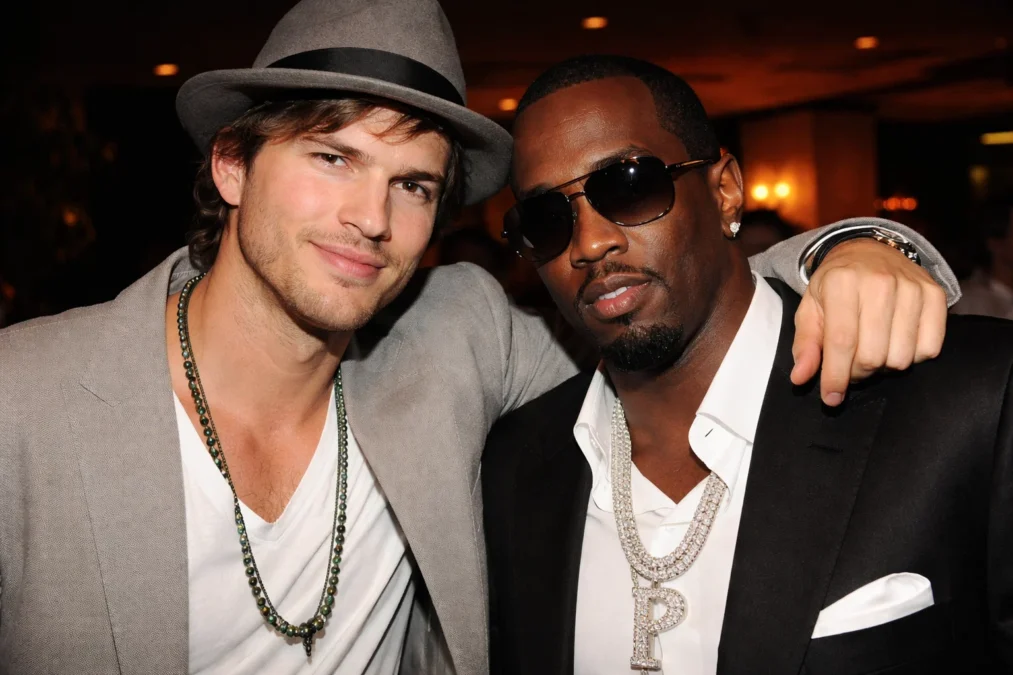
The story begins not in 2024, but in 2013. Diddy was under investigation for an alleged assault at the time. In a bid to vouch for his character, several high-profile friends, including Kutcher and his then-wife Demi Moore, submitted letters to the court. Kutcher’s letter, co-signed with Moore, painted a portrait of Diddy as a “good friend,” a “loving father,” and a “personal mentor” to Kutcher himself. He described Diddy’s home as a place of “warmth and laughter.”
This was, by all accounts, a friend doing what friends often do: standing by someone they care about during a difficult time. The case was ultimately settled, the letter faded from public view, and life in the celebrity fast lane continued. Kutcher, meanwhile, was actively building a second act as a tech investor and philanthropist, co-founding Thorn, an organization dedicated to combating child sexual abuse. This duality—the character witness for a friend under a cloud and the advocate for the vulnerable—would later become the central friction point when history decided to take a second look.
The Context: A Letter Written in a Different Era
To understand the initial act, we must mentally time-travel back to 2013. The cultural landscape was markedly different. The #MeToo movement, which would erupt in 2017, was still dormant. Public discourse around holding powerful figures in the entertainment industry accountable was not the omnipresent force it is today. Celebrity culture often operated on a code of silence and mutual protection, a “see no evil, speak no evil” approach that maintained the glossy façade of Hollywood. In this environment, writing a character reference for a friend, even one facing serious allegations, was not an anomalous act. It was, arguably, part of the unwritten rules.
The letters from Kutcher and others were likely viewed as a procedural formality, a gesture of personal loyalty that existed within the private confines of a legal process. The perception of Diddy at the time was also different; he was the quintessential success story, the Bad Boy mogul, a larger-than-life figure of music, fashion, and business. The allegations were a bump in the road, not the defining narrative.
However, even then, such actions existed in a moral gray area. The act of vouching for someone’s character in a legal setting carries immense weight. It uses one’s own social capital and credibility to indirectly influence an outcome. When Ashton Kutcher and Demi Moore put their names on that letter, they were lending their reputations—built on years of public work—to Diddy’s defense.
They were asking the court to see the man they knew privately, potentially offsetting the image of the man accused. This is the inherent power and risk of the character witness: it personalizes the abstract, often making it harder to see the full picture. The letter was a snapshot of a private friendship, but once filed in a public court, it became a permanent part of a historical record, waiting to be reinterpreted under a new cultural lens.
The Turning Point: Raids, Lawsuits, and a Resurfaced Past
The ground beneath the Ashton Kutcher diddy narrative began to violently shift in March 2024. Federal Homeland Security agents executed coordinated raids on Diddy’s mansions in Los Angeles and Miami. While the specific affidavit remains sealed, the raids were reportedly connected to a federal sex trafficking investigation. This dramatic law enforcement action was not an isolated event; it was the crescendo of a devastating rhythm of allegations that had built over the preceding months.
Starting in November 2023, multiple civil lawsuits were filed against Diddy, including one by his former longtime partner, Cassie Ventura. Her lawsuit contained graphic allegations of physical abuse, sexual assault, and coercive control over more than a decade. The suit was settled quickly, but it opened the floodgates. Several other plaintiffs came forward with similarly harrowing accounts, painting a picture of a pattern of alleged predation and violence.
It was in this incendiary new context that the 2013 character reference letters, including the one from Ashton Kutcher, were rediscovered and published by major news outlets. The contrast was jarring, to say the least. The man described as a “good friend” and “personal mentor” in the letter was now the subject of federal raids and multiple accounts of alleged brutal misconduct. The public and media reaction was swift and severe. The letter was no longer viewed as a simple act of friendship; it was re-framed as a misguided, or worse, complicit, act of shielding.
The narrative flipped from “friend supports friend” to “celebrity protects alleged predator.” This resurfacing forced an uncomfortable public reckoning for Kutcher, whose image was now tangled in a story he likely thought was buried in a decade-old court file. The Ashton Kutcher diddy connection became a case study in how the past can catch up with stunning velocity when new truths demand to be heard.
The Thorn in His Side: A Devastating Conflict of Mission and Action
The most damaging aspect of the Ashton Kutcher diddy letter’s resurgence was its stark, almost unbelievable, contradiction with Kutcher’s own public advocacy work. Since 2009, Kutcher had been a co-founder and the very public face of Thorn: Digital Defenders of Children. The organization’s mission is unequivocal: to build technology to defend children from sexual abuse. Kutcher had testified before Congress on the issue, speaking with passion and knowledge.
He had built a reputation as a serious, committed humanitarian who used his platform for profound good. This made the character letter for Diddy—who was now facing allegations that, while not directly related to Thorn’s mission, spoke to a pattern of alleged abuse of power and violence against women—seem hypocritical to many.
The public perceived a catastrophic misalignment of values. How could a man who champions the most vulnerable lend his name to defend someone accused of horrific violence? This wasn’t just about a poor judgment call; it struck at the core of Kutcher’s credibility. The trust he had built in his advocacy space felt betrayed.
Critics argued that by writing the letter, he had, intentionally or not, leveraged his status as an anti-abuse advocate to bolster the character of someone now facing grave abuse allegations. The optics were devastating. It presented a painful lesson: public figures are held to a holistic standard. A good deed in one arena can be utterly eclipsed by a conflicting action in another, especially when both touch on the fundamental themes of power, vulnerability, and protection.
The Broader Culture: Celebrity Character References Under the Microscope
The Ashton Kutcher diddy episode is not an isolated incident. It serves as a powerful lens through which to examine the long-standing, problematic practice of celebrity character references in legal proceedings. Time and again, we see famous faces penning letters for friends, colleagues, or business associates facing serious charges. These letters often speak to a private, curated version of the individual, one that exists in glamorous parties, business deals, and charitable galas. They rarely, if ever, address the specific allegations at hand. As one legal commentator noted:
“Character letters from celebrities are often exercises in privilege. They ask the court to see the defendant not as the sum of their alleged actions, but as the charming person they know at a cocktail party. It subtly implies that their fame and success should be mitigating factors.”
This table illustrates a few notable examples beyond the Ashton Kutcher diddy case:
| Celebrity Reference Giver | Defendant/Case | Alleged Crime | Public Backlash? |
|---|---|---|---|
| Multiple Hollywood Figures | Harvey Weinstein (pre-trial) | Sexual Assault/Rape | Significant, seen as part of a system of silence |
| Ashton Kutcher & Demi Moore | Sean “Diddy” Combs (2013) | Assault | Massive, upon resurfacing in 2024 |
| Several Tech & Media Leaders | Elizabeth Holmes (Theranos) | Massive Fraud | Moderate, focused on misplaced trust |
| Professional Colleagues | R. Kelly | Sexual Abuse of Minors | Severe, seen as willful ignorance |
The backlash to these letters has grown exponentially in the post-#MeToo era. The public is now acutely aware of how networks of power can be used to insulate individuals from consequences. A character reference from a powerful friend is no longer seen as just a nice gesture; it is scrutinized as a potential tool for undermining justice, a way of saying “this person is one of us, and our world should protect its own.” The Ashton Kutcher diddy letter is now a prime exhibit in this cultural shift, demonstrating that such actions are no longer forgotten footnotes but can become central to the story of accountability itself.
The Path Forward: Lessons in Accountability and Evolved Understanding
So, what does the Ashton Kutcher diddy saga teach us? For public figures, it underscores the eternal nature of their digital footprint. An action taken in one context can be judged mercilessly in another. It highlights the critical need for individuals, especially those with platforms built on social good, to exercise extreme diligence when asked to lend their name to a legal defense.
The question must shift from “Is this person my friend?” to “What is the full nature of these allegations, and what message does my support send?” It calls for a more nuanced understanding of loyalty—one that does not automatically equate support with blanket defense, but can also involve demanding personal accountability from those within one’s circle.
For the public and media, the story is a lesson in complexity. Ashton Kutcher could have done immense, tangible good with Thorn while also having made a significant error in judgment regarding Diddy. Holding both truths simultaneously is the work of mature discourse. The frenzy should not erase the anti-trafficking work, nor should the anti-trafficking work absolve the poor judgment. The focus should be on the systemic issue it reveals:
the mechanisms that allow power to be consolidated and protected. The conversation has moved from simply criticizing Kutcher to asking larger questions: How do we dismantle systems of celebrity protection? How do we create cultures where victims are heard before powerful friends are mobilized? The Ashton Kutcher diddy story, painful and messy, has become an unexpected catalyst for that necessary discussion.
The Unanswered Questions and Lasting Impact
The final chapters of both the Diddy legal saga and the reputational impact on Ashton Kutcher are yet to be written. Federal investigations are slow and opaque. The civil suits will wind their way through courts. For Kutcher, the impact is more intangible but no less real. Trust, once fractured, is difficult to rebuild. His future advocacy work will likely be viewed, for some time, through the prism of this controversy.
The story remains a potent reminder that in the age of information, there are no true endings, only moments of reassessment. The Ashton Kutcher diddy connection is now a permanent part of both men’s legacies—a cautionary tale about the intersections of fame, friendship, and the relentless pursuit of justice in a world that is finally, if imperfectly, learning to listen to the voices it once silenced.
Conclusion
The intricate story of Ashton Kutcher’s is far more than a fleeting celebrity scandal. It is a cultural artifact that captures a moment of transition. It showcases the stark difference between the celebrity playbook of 2013 and the demand for accountability in 2024. The resurfaced character letter acts as a bridge between these two eras, forcing a reevaluation of past actions through a modern, less forgiving lens.
This episode painfully illustrates the heavy burden of influence, demonstrating that a gesture intended as private loyalty can become a public litmus test for one’s moral consistency, especially when it clashes with a carefully built humanitarian identity. Ultimately, the Ashton Kutcher diddy narrative pushes us to examine the uncomfortable spaces where personal friendship collides with public principle, and challenges us to consider what true accountability looks like—not just for the accused, but for those who, perhaps with the best of personal intentions, once stood in the way.
FAQ
What exactly did Ashton Kutcher say in his letter about Diddy?
In the 2013 character reference letter for Sean “Diddy” Combs, Ashton Kutcher and his then-wife Demi Moore described Diddy as a “good friend,” a “personal mentor” to Kutcher, and a “loving father.” They wrote about the “warmth and laughter” in his home and stated they would trust him around their own children. The letter aimed to portray Diddy as a person of good character during his legal proceedings at the time, which were related to an assault allegation. The language was personal and supportive, focusing solely on their private, positive experiences with him.
Why did the Ashton Kutcher diddy letter cause such an uproar a decade later?
The Ashton Kutcher diddy letter caused a massive uproar upon its resurfacing in 2024 because the context had changed seismically. When it was written, Diddy was facing a single assault allegation. By 2024, he was the subject of multiple civil lawsuits containing graphic allegations of sexual assault, sex trafficking, and violent abuse, as well as federal raids on his homes. The stark contrast between the man portrayed in Kutcher’s letter and the man depicted in these new allegations made the letter seem deeply misguided. Furthermore, it clashed violently with Kutcher’s public role as an anti-child-sexual-abuse advocate with Thorn, creating a perception of hypocrisy and a failure to align actions with stated values.
Did Ashton Kutcher apologize for writing the Diddy character letter?
While Ashton Kutcher did not issue a formal, standalone apology specifically for the Diddy letter, he addressed it indirectly in the context of a broader apology. In September 2023, he and his former wife, Mila Kunis, faced public criticism for writing character letters for their That ’70s Show co-star Danny Masterson, who was convicted of rape. In a video apology for those letters, Kutcher stated, “We have no business writing these letters.” The public and media largely applied this sentiment to the Diddy letter as well, viewing it as an admission that the practice itself was a mistake. The timing, just months before the Diddy letter resurfaced, compounded the scrutiny.
How has this affected Ashton Kutcher’s reputation and work with Thorn?
The Ashton Kutcher diddy controversy has significantly damaged Ashton Kutcher’s reputation, creating a crisis of credibility. While his foundational work with Thorn is substantively good, the letter introduced a jarring dissonance that critics have seized upon. It has forced a re-evaluation of his public persona, with many now viewing his advocacy through a more skeptical lens. The incident has become a permanent part of his public narrative. While he stepped down as Chairman of Thorn’s Board in September 2023 following the Masterson letter backlash, the organization continues its work. However, the association has undoubtedly complicated his legacy, demonstrating how a single conflicting action can cast a long shadow over years of dedicated effort.
What does this situation say about celebrity culture and power?
The Ashton Kutcher diddy situation is a textbook case of how celebrity culture has historically used its power to create protective circles. Writing character references is one tool in this system, where social capital and fame are leveraged to influence outcomes and shape narratives. This episode shows that the public is increasingly rejecting this old playbook. There is a growing demand for transparency and a deeper understanding that loyalty among the powerful should not override justice and accountability for alleged victims. It highlights a cultural shift where past actions of celebrities are re-examined, and they are held to a higher standard that requires their private allegiances to be consistent with their public values.
You may also read
The Ultimate Guide to the Seahawks Jersey: More Than Just Blue and Green