
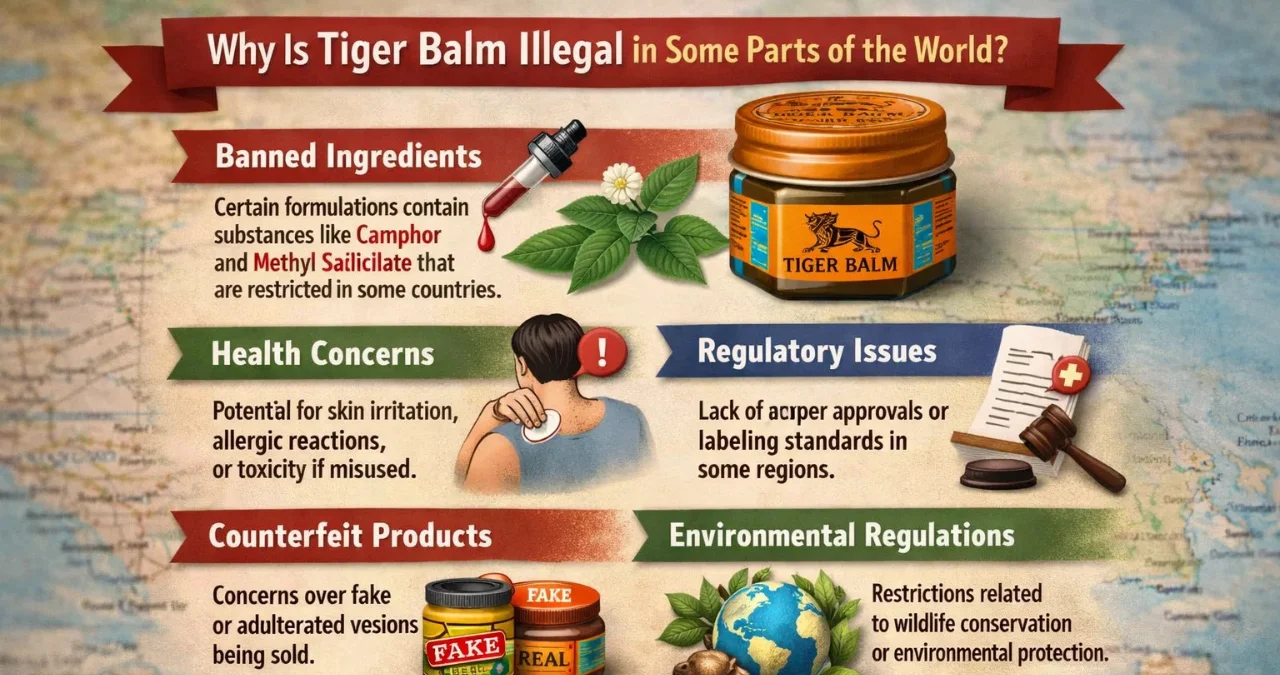
Let’s clear the air right from the start. If you’ve ever rubbed that familiar, soothing ointment on a sore muscle or a pounding temple, you might be startled by a surprising question floating around the internet and even in some travel circles: why is tiger balm illegal? Well, here’s the straight truth—it isn’t. Not really. Tiger Balm is a completely legal, over-the-counter product sold in pharmacies, supermarkets, and stores in most corners of the world, from its homeland in Singapore to the shelves of America and Europe.
But hold on, the story doesn’t end there. The persistent rumor that Tiger Balm is forbidden isn’t just pulled out of thin air. It’s a fascinating mix of historical mix-ups, ingredient scrutiny, and travel troubles that have, frankly, blown things a bit out of proportion. This article will be your guide, separating fact from fiction and exploring the very specific reasons behind the confusion. By the end, you’ll not only understand the legal landscape of this iconic red-and-white jar but also become a savvy user of its warming powers.
The Heart of the Matter: A Powerful, Legal Remedy
First, let’s establish what we’re talking about. Tiger Balm is a topical analgesic. That’s a fancy term for a cream or ointment you apply to your skin to relieve minor aches and pains. Think of a stiff neck after a long drive, the dull ache of overworked shoulders, or the tension of a headache. Its magic—and its regulatory attention—comes from its active ingredients. The classic red Tiger Balm, for instance, typically contains:
- Camphor (11%): This is the big one. It creates that classic warming sensation and helps relieve pain and itchiness.
- Menthol (10%): This provides the cool, minty feeling that seems to contrast with the warmth, offering a powerful sensation that can distract from pain.
- Cajuput Oil: Derived from a tree in the myrtle family, it adds to the warming effect and has a sharp, pleasant smell.
These ingredients are strong, but they are absolutely legal and approved for topical use by health authorities like the U.S. Food and Drug Administration (FDA) and its counterparts worldwide. So, if the formula is legal, where did all the rumors begin? To answer that, we have to take a step back in time.
A Historical Mix-Up: Tigers, Opium, and Mistaken Identity
This is where the plot thickens, and the confusion finds its oldest roots. In the late 19th and early 20th centuries, the world of medicine was very different. So-called “patent medicines” were wildly popular, and their ingredients were often a mystery, sometimes a dangerous one.
- The Illicit “Tiger” Brands: During this era, several highly addictive, opium-based products with names like “Tiger Chlorodyne” and “Tiger Worm Destroyer” were sold, primarily in the United States and United Kingdom. Opium, of course, is a controlled and illegal narcotic.
- The Birth of a Balm: Meanwhile, across the globe in Rangoon (now Yangon, Myanmar), an herbalist named Aw Chu Kin was developing a different kind of remedy. After his death, his sons, Aw Boon Haw and Aw Boon Par, perfected the formula and named it Tiger Balm when they moved their business to Singapore in the 1920s. The “Tiger” symbolized strength and vitality in Asian culture.
- The Case of Mistaken Identity: Can you see the confusion? Western customs officials and authorities, seeing a new, pungent ointment from Asia with “Tiger” in the name, sometimes mistakenly lumped it together with the illegal opium-based “Tiger” products. This created a lingering, unfair suspicion that has echoed for decades, like a game of telephone where the message got completely twisted. Crucially, Tiger Balm has never contained opium, tiger parts, or any illegal narcotics.
The Real Regulatory Hurdles: Ingredients and Rules
Now we get to the meat of the issue. While Tiger Balm as a product is not illegal, its powerful ingredients mean it doesn’t get a completely free pass everywhere. Different countries have different rules about how strong a medicine can be before it needs special handling. This is where your personal experience might vary depending on where you live or travel.
The Camphor Conundrum
Camphor is a wonderful pain reliever, but in very high doses or if swallowed, it can be toxic. Because of this, health agencies strictly control its concentration.
- In the United States, the FDA allows camphor in OTC products up to 11%, which is exactly what’s in standard Tiger Balm Red. It’s perfectly legal and sits right on the shelf.
- In the European Union and Japan, regulations are often stricter. Some Tiger Balm formulations, especially extra-strength versions, may contain camphor levels that exceed the limit for a general sales product. In these cases, it might be classified as a “pharmacy-only” medicine. This doesn’t mean illegal! It simply means you buy it from the pharmacist’s counter, where a professional can give you advice on its use.
Here’s a simple table to visualize the legal status in different scenarios:
| Situation | Typical Legal Status | The Simple Reason Why |
|---|---|---|
| Buying Tiger Balm at a U.S. Drugstore | ✅ Legal & Over-the-Counter | Ingredients fall within FDA-approved limits for self-care. |
| Ordering “Ultra” Strength from Asia to Europe | ⚠️ May be “Pharmacy-Only” or Restricted | Camphor concentration may exceed general public sale limits, requiring pharmacist supervision. |
| Carrying it in Your Checked Luggage | ✅ Legal, but may be inspected | The unusual waxy substance and strong smell can appear suspicious on airport scanners. |
| Using it as a Professional Athlete in Competition | ⚠️ Use with Extreme Caution / Potentially Banned | High menthol levels could be considered a prohibited stimulant or masking agent under anti-doping rules. |
Travel Troubles: Why Your Balm Might Get a Second Look
Ah, travel. This is where the myth that Tiger Balm is illegal gets its most colorful and personal stories. Picture this: you’re in a security line at an airport, and a security officer pulls your bag aside. They pull out that little red jar. Your heart might skip a beat. What’s going on?
- The Scent: Sniffer dogs are trained to detect specific organic compounds. The incredibly strong, medicinal aroma of camphor, menthol, and oils can sometimes pique a dog’s interest, leading to a bag check.
- The Look: On an X-ray machine, a dense, waxy substance in a metal or plastic tin doesn’t look like clothes or electronics. It looks unusual, and security’s job is to check unusual items.
- The Result: A polite officer will open it, smell it, recognize it, and send you on your way. It’s a routine check, not a confiscation for an illegal substance. But if you didn’t know that, you might walk away thinking, “Wow, they almost took my Tiger Balm—it must be sketchy!” This experience fuels the rumor mill.
A Surprising Ban: Tiger Balm and the World of Elite Sports
Here’s a twist many people don’t see coming. For the average person, Tiger Balm is a safe, legal relief. But for an elite athlete competing under the World Anti-Doping Agency (WADA) code, it’s a potential pitfall.
Menthol, when used in very high concentrations, is on WADA’s monitoring list. While simple topical use for pain is usually okay, using large amounts (like in a steam inhalation or a heavy chest rub before an event) could be interpreted as using a stimulant or a masking agent to affect breathing or body temperature. An athlete could test positive and face disqualification. So, in the highly specific world of professional sports, its use is heavily restricted—a form of “illegality” in that arena alone.
How to Be a Smart and Legal Tiger Balm User
Knowledge is power! Now that you understand the landscape, you can use Tiger Balm confidently and correctly.
- Buy from Reputable Sellers: Purchase from known pharmacies, major retailers, or the official Tiger Balm website. This guarantees you get a genuine product with the correct, legal ingredient levels.
- Check Local Rules When Traveling: If you’re traveling internationally with a large quantity, a quick online check of the destination country’s medicine regulations can’t hurt. When in doubt, keep it in its original, clearly labeled packaging.
- Follow the Instructions! This is the golden rule. Only use it topically (on your skin), never ingest it, avoid using it on broken skin or near sensitive areas like your eyes, and keep it away from children. Its power comes from responsible use.
- Athletes, Check with Your Coach: If you compete at a regulated level, always consult your coach or sports body about any product you use, including seemingly harmless balms and creams.
The Bigger Picture: Celebrating Safe, Herbal Wisdom
The journey to understand why is tiger balm illegal teaches us a bigger lesson about how the world regulates traditional remedies. Tiger Balm represents a brilliant fusion of ancient herbal knowledge—using camphor and menthol from plants—and modern safety standards. Governments aren’t trying to ban helpful products; they are working to ensure they are consistently strong, safe, and properly labeled for everyone.
The optimistic view is that this scrutiny is a form of respect. It means these traditional ingredients are taken seriously by science and law. The regulations confirm their potency and ensure that for generations to come, people can reliably reach for that little jar for relief.
Conclusion: A Legal Legend of Relief
So, let’s lay the myth to rest. Asking why is tiger balm illegal is based on a fascinating cocktail of history and happenstance, not fact. It is a globally recognized, legally sold, and profoundly effective product. Its story involves historical mix-ups with illicit substances, understandable airport security checks, and the nuanced rules of international health regulations and elite sports.
The confusion reminds us to be inquisitive consumers—to look past rumors and understand the why behind the rules. Tiger Balm itself is a testament to the enduring power of simple, plant-based solutions. Used wisely and according to the guidelines, it remains a safe, legal, and trusted friend for millions seeking comfort from everyday aches. So, the next time you unscrew that cap and breathe in that potent, familiar scent, you can do so with the confidence that you’re using a world-renowned legend in relief, one that’s on the right side of the law.